
Crypto Investment
Bitcoin to Adriatic Luxury Living: Montenegro Crypto Real Estate Guide 2025
January 21, 2025
18 min read
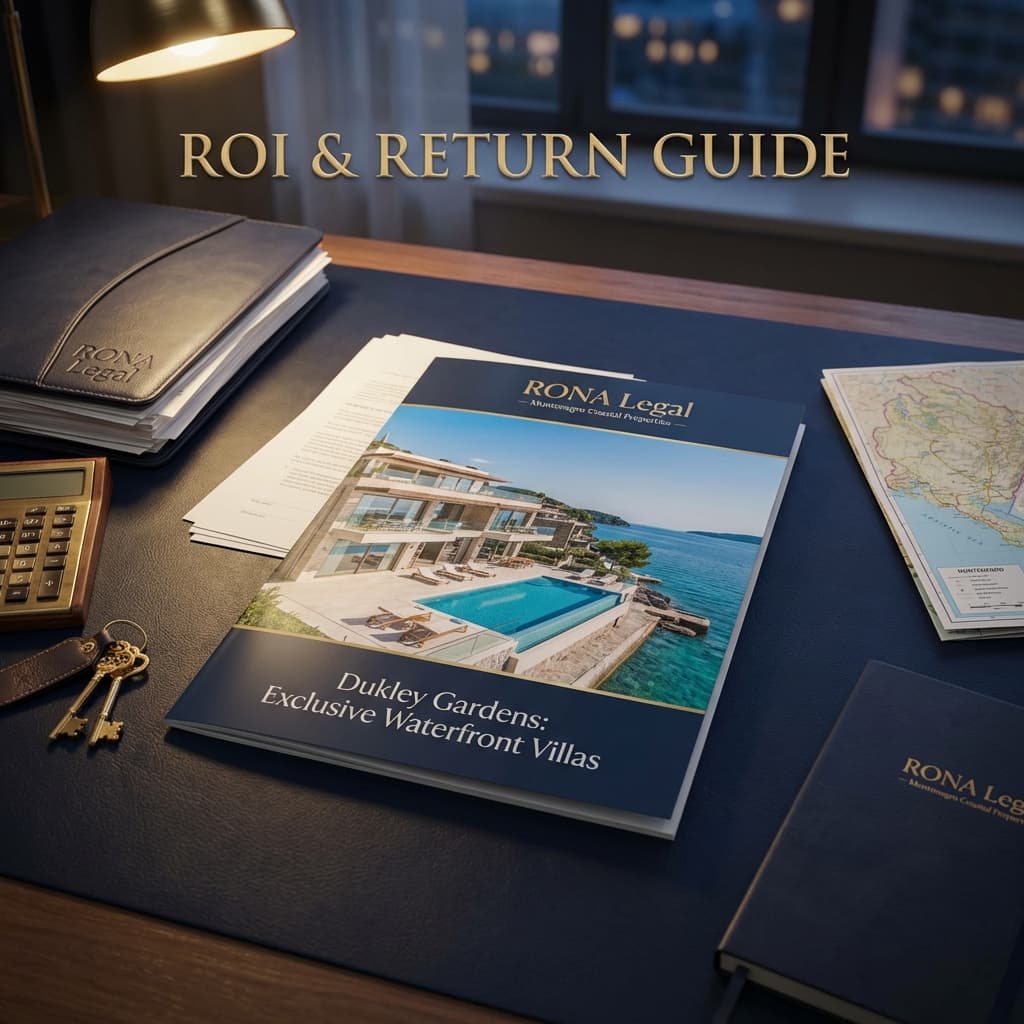
In 2025, you're not just buying digital assets with your Bitcoin anymore. You can purchase a luxury villa on the Adriatic coast, where you can see every shade of blue. Montenegro has become Europe's new safe haven for crypto investors. But how exactly do you buy real estate with Bitcoin, Ethereum, or USDT? What is the 'grey area'? Will you pay taxes? And most importantly: Is this transaction secure? You'll find all the answers in this comprehensive guide.
Montenegro's current Prime Minister Milojko Spajic's financial background and 'crypto-friendly' vision is rapidly advancing the country toward becoming a 'Crypto Paradise'. In 2024, more than half of the total 890 million Euro Foreign Direct Investment (FDI) that came to Montenegro (455 million Euro) flowed into the real estate sector. A significant portion of these figures came from transactions made with digital assets like Bitcoin, Ethereum, and Tether (USDT) instead of the traditional banking system.
The international circulation of funds of 1 million Euros and above (SWIFT system, correspondent bank restrictions, source inquiries) creates serious friction costs. While small-scale transactions (100,000-200,000 Euros) can usually be resolved with cash or simple bank transfers, cryptocurrency functions not only as an investment vehicle in this large segment but also as a liquidity tool that enables capital mobility.
Important Statistic: The total value of 30+ M&A transactions completed at luxury projects like Dukley Gardens in 2024 exceeded 180 million Euros, and a significant portion of these were completed with crypto payments.
The 'grey area' term that scares most people doesn't actually mean 'illegal'. For lawyers, this term refers to an area that is unregulated but not prohibited. Cryptocurrencies in Montenegro are not legal tender—the official currency is the Euro. However, this doesn't mean it's impossible to buy real estate with crypto.
In February 2025, the Montenegrin Parliament made critical changes to the Anti-Money Laundering and Terrorism Financing Prevention Law. These changes defined crypto assets for the first time and opened transactions to supervision:
Critical Information: This law did not prohibit crypto real estate purchases; instead, it indirectly legitimized them by defining them. However, it increased transaction security by eliminating anonymity.
Dukley Gardens on Budva's Zavala Peninsula is a pioneer in crypto adoption in Montenegro. This ultra-luxury project offers Bitcoin (BTC), Ethereum (ETH), and Tether (USDT) payments as a standard option. Dukley's crypto policy provides three main advantages:
| Feature | Dukley Gardens Advantage | Explanation |
|---|---|---|
| Accepted Crypto | BTC, ETH, USDT | Tether (USDT) most preferred due to volatility risk |
| Minimum Transaction | 1,000,000 EUR+ | Optimized for institutional investors |
| Transfer Tax | 0% | Tax exemption on new construction projects (52,000 EUR savings) |
| Corporate Wallet | Switzerland, Estonia, Dubai | Crypto acceptance through international legal entities |
| Trade-In Program | Yes | Possibility to exchange existing real estate or crypto |
The information mentioned in the user query 'heard from Dukley lawyer that transactions over 1 million Euro are possible' has been confirmed by our research. The company's own legal and finance department has established a special structure. When you want to buy a 1 million Euro villa from a private seller, the seller may not have the technical knowledge or trust to accept this money. However, Dukley can manage this risk as an institutional counterparty.
The legal basis for buying real estate with crypto in Montenegro is based on the 'Clausula Intabulandi' (Transfer Authorization Declaration) mechanism. Here's how it works:
The notary sends the documents to the Land Registry (Katastar), and the buyer is registered as the new owner within 1-2 weeks. However, there's a critical point to note: Real Estate Acquisition Tax (RETT) must be paid in Euros. The state tax office does not accept crypto.
One of the most important financial advantages in Montenegro is that no transfer tax is paid on new construction projects (like Dukley Gardens) for a 1 million Euro investment. Here's the detailed comparison:
| Scenario | 1,000,000 EUR Investment | Tax/VAT | Total Cost |
|---|---|---|---|
| New Construction (Dukley) | 0% Transfer Tax | VAT included in price (21%) | 1,000,000 EUR |
| Resale Property | 3-6% Transfer Tax | 52,000 EUR | 1,052,000 EUR |
| DIFFERENCE | 52,000 EUR Savings | +5.2% Advantage | - |
Strategy Tip: If you're planning a 1 million Euro crypto investment, you can save 52,000 EUR in cash by purchasing from new projects like Dukley, Porto Montenegro, or Luštica Bay instead of the resale market.
However, 15% income tax may arise on profits from crypto sales. Still, the taxation of this transaction in the direct exchange (crypto-for-property) method is in a 'grey area' because the tax office doesn't yet have the technical infrastructure to track wallets.
A 10% drop in Bitcoin price at the transaction moment means a 100,000 EUR loss in a 1 million EUR transaction. Solution:
The seller or developer can check whether the crypto currencies sent by the buyer come from illegal activities (Darknet, hack incidents, Tornado Cash mixers). Solution:
If the seller receives the crypto but says 'I didn't receive my payment' before the notary, the court process takes time. Solution:
Traditional banks in Montenegro (CKB, Erste, NLB) generally reject or block transfers directly from crypto exchanges (Binance, Kraken). A SWIFT transfer with 'crypto trading' explanation can lead to account closure. However, there are two solutions:
Zapad Bank, Dukley Gardens' financing partner, is a boutique bank that takes a more flexible approach to foreign investors and 'High Risk' portfolios. Although it doesn't offer direct crypto custody services, it's more tolerant of crypto-sourced funds entering the system (when required AML documents are provided).
In case of purchase from a private seller or when the developer doesn't directly accept crypto, large real estate agencies like CMM Group come into play. These agencies, through licensed OTC (Over-The-Counter) desks, take the buyer's crypto, deduct their commission (1-5%), and pay the seller in Euros. More costly but solves the banking problem.
Q: Which cryptocurrencies are accepted?
A: Dukley Gardens and similar luxury projects generally accept Bitcoin (BTC), Ethereum (ETH), and Tether (USDT). USDT is most preferred due to exchange rate stability.
Q: What is the minimum investment amount?
A: Crypto payments are generally standardized for transactions of 1 million Euros and above. For smaller transactions (<500K EUR), cash or bank transfer may be more practical.
Q: Will I pay tax on profits from crypto sales?
A: According to Montenegro laws, 15% income tax may arise on profits from crypto sales. However, in the direct exchange (crypto-for-property) method, this is in a 'grey area'. As Rona Legal, we recommend notifying about this risk (possibility of emerging in future audits).
Q: How long does the transaction take?
A: Notary contract signing + blockchain confirmation (10 minutes - 1 hour) + Clausula Intabulandi declaration can be completed on the same day. Title registration takes 1-2 weeks.
Q: Will I get a residence permit?
A: Yes. Real estate purchase in Montenegro (regardless of value) grants temporary residence permit rights. With a 1 million EUR investment, it can be used as a Plan B passport/residence strategy.
Before buying real estate in Montenegro with Bitcoin, Ethereum, or USDT, check:
Real estate investment of over 1 million Euros in Montenegro with crypto is definitely possible, and this process is becoming standardized thanks to market makers like Dukley Gardens. The 'Grey Area' is gradually evolving into a 'Regulated Area' with the 2025 AML law.
However, trying to manage this complex process alone carries great risks. Wrong contract clauses, currency losses, 'tainted coin' accusations, and legal disputes can lead to losses of thousands of Euros.
As Rona Legal, we provide full legal support at every step: contract preparation, KYC/SoF file management, notary coordination, blockchain transfer verification, banking relationships, and title registration process.
Important: All information in this article is for general informational purposes. Before investing in real estate with crypto assets, definitely get personalized legal advice. Laws and procedures can change rapidly.
📞 For professional legal support for your crypto real estate investment in Montenegro: Contact Rona Legal for detailed information and consultation.
First consultation is free. We evaluate your situation and offer customized solutions.